The Norwegian Center for Stem Cell Research
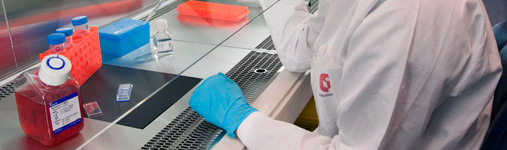
The Norwegian Center for Stem Cell Research is a national facility dedicated to basic and translational stem cell research, technical training, and public education.
E-mail for general requests: anne.kibsgaard@medisin.uio.no
Anne Kibsgaard
Phone: +47 22 85 11 35 Fax: +47 22 85 10 58
Media inquiries:
Inquiries from the media should be made to Anne Kibsgaard by email or telephone.
Patient inquiries:
All patient inquiries should be made by email to Anne Kibsgaard. The Center can not administer patient inquiries made through any other channels.
Important new findings regarding retinal and limbal stem cells published by the Moe group
April 2012
Erik O. Johnsen,Rebecca C. Frøen, Réka Albert, Bente K. Omdal, Zsolt Sarang, András Berta,
Bjørn Nicolaissen, Goran Petrovski, Morten C. Moe
Activation of neural progenitor cells in human eyes with proliferative vitreoretinopathy
Experimental Eye Research 98 (2012) 28-36
Aboulghassem Shahdadfar, Kristiane Haug, Meeta Pathak, Liv Drolsum, Ole Kristoffer Olstad,
Erik O. Johnsen, Goran Petrovski, Morten C. Moe, Bjørn Nicolaissen
Ex vivo expanded autoloous limbal epithelial cells on amniotic membrane using a culture medium with human serum as single supplement
Experimental Eye Research 97 (2012)1-9
Seminar - General principles for the spatial organization of bacterial genomes
18 April 2012
Senior Lecturer in Molecular Biology, Justin M. O'Sullivan of Massey University (NZ) will present work that highlights the general principles of genome organization in Escherichia coli and Pseudomonas aeruginosa.
Time and place: 18 April, 12.00-13.00, Seminar room 2240, Dept. of Biochemistry, Domus Medica
Internasjonalt forskningssamarbeid - Philippe Collas gruppe
13 Mars 2012
Det medisinske fakultet ved Universitetet i Oslo har mye godt internasjonalt forskningssamarbeid. Visedirektør for Nasjonalt Senter for Stamcelleforskning, professor Philippe Collas, presenterer noe av hans omfattende internasjonale samarbeid her
Guest lecture - Interrogating disease and development with human pluripotent stem cells
8 February 2012
Interrogating disease and development with human pluripotent stem cells
by Dr. Stephen Sullivan, University of California, San Diego
Wednesday February 8 at 1300, Seminar room 2183, Nutrition, Domus Medica
Cand.med. Jan Otto Beitnes defends his PhD thesis on Cell therapy in acute myocardial infarction
3 February 2012
Cand.med. Jan Otto Beitnes (Brinchmann lab) defends his PhD thesis entitled: "Cell therapy in acute myocardial infarction"
Trial lecture:
10:15 at Auditorium 1 (green), Rikshospitalet
Disputas:
13:15 at Auditorium 1 (green), Rikshospitalet
Gjennombrudd i Stamcelleforskning
24 Januar 2012
I USA har to kvinner blitt bedre av uhelbredelige øyesykdommer ved bruk av stamceller. - Dette har vi ventet på, det ser veldig lovende ut, sier førsteamanuensis og netthinnekirurg ved Oslo Universitetssykehus Morten C. Moe.
Les mer om dette på:
http://www.nrk.no/vitenskap-og-teknologi/1.7966666
Guest lectures - Metakaryotic biology, a revolution in cancer stem cell research
13 January 2012
Metakaryotic biology, a revolution in
cancer stem cell research
by Professor William G. Thilly
Professor of Genetics, Toxicology and Biological Engineering
Massachusetts Institute of Technology
Friday January 13 at 11 A.M. The auditorium at the research building, Radium Hospital.
Metakaryotic biology: stem cells of organogenesis and carcinogenesis
The stem cells of human organ development and tumor growth are not eukaryotic cells! They are "metakaryotic"
cells with hollow bell shaped nuclei appended to rather than enclosed in the cytoplasm. They divide by both
symmetric and asymmetric amitoses creating the eukaryotic (mitotic) cells of tissue and tumor parenchyma. Their
"chromosomes" appear to be continuous, joined at telomeres. They create a double stranded RNA/DNA replicative
intermediate prior to and during cytokinesis. They are strongly resistant to x-rays and chemo-"therapeutic" agents.
Multiple agents that kill them in cell culture have been found.
Friday January 13 at 1 P.M. The auditorium at the research building, Radium Hospital.
Metakaryotic biology: stem cell mutation and age-specific cancer mortality rates
Fetal/juvenile organogenic stem cells appear to have very high mutation rates. "Initiation" is presented as blockage
of maturation of organogenic stem cells resulting in a slowly growing mutator/hypermutable preneoplastic stem cell
population. A modified Armitage-Doll two stage cancer model is offered and discussed in terms of colorectal cancer
mortality rates, heritable cancer risk and immigrant cancer pattern shifts.
Collas group publishes research on epigenetic prepatterning in the prestigious journal Developmental Cell
1 December 2011
Marked proteins provide instructions for gene expression after fertilization
When a sperm fertilizes an egg, their individual genes combine to form a new genome in what is known as a zygote. Basically, activation of the zygotic genome represents the transfer of developmental control from the parents to the offspring. The factors that regulate expression of the zygotic genome have not been explored and are not well understood. Now, a new study published by Cell Press on December 1st in the journal Developmental Cell identifies "decorations" that mark the zygotic genes before they are activated and may serve to regulate expression of critical developmental genes.
It is well established that one major mechanism for regulating gene expression is histone modification. Histones are proteins that are like spools around which the long strands of DNA are wound. Histones can be altered to repress or promote gene transcription. "Previous work has demonstrated that developmental genes are marked by modified histones in sperm, and this suggests a potential predictive role for histone modification in the regulation of zygotic genome activation," suggests senior study author, Dr. Philippe Collas from the University of Oslo and the Norwegian Center for Stem Cell Research.
In collaboration with colleagues at the Norwegian School of Veterinary Science, the University of Birmingham and the Genome Institute of Singapore, Dr. Collas examined histone modifications on zebrafish genes before and after activation of the zygotic genome. They were able to accomplish this because after fertilization, there is a brief period during which the zebrafish zygote undergoes several rounds of cell division before any of the zygotic genes are activated. They found that histone modifications of inactive zygotic genes guided the developmental gene expression program.
Taken together, the results suggest that there is a "pre-patterning" of the developmental program that is in place prior to gene activation."Intriguingly, these findings suggest that early developmental instructions may be provided by specific marking of the sperm and egg genomes by modified histones, which may be transmitted to the embryo through fertilization," explains Dr. Collas.
Listen to podcast interview with Philippe Collas here
Gareth Sullivan hired as new group leader at the Center
15 November 2011
Dr. Gareth Sullivan has been hired as new group leader in the area of human pluripotent stem cell biology. Sullivan, who at the time of hiring had been working at the MRC Center of Regenerative Medicine, University of Edinburgh, brings to the Center very strong expertise in human embryonic and induced pluripotent stem cells. With a research plan focused on endoderm differentiation and the development of novel methodologies for reprogramming somatic cells, and with past experience in both academic and biotech industry sectors, Sullivan greatly strengthens the Center's capabilities in this dynamic and innovative research area. Of particular importance is Sullivan's commitment to develop cell-based drug testing platforms and to build translational bridges to the clinic. The Center extends a warm welcome to Gareth and looks forward to a highly fruitful and collaborative interaction in the coming years.
Read Forskningsrådets presentation of Sullivan
(in Norwegian only) here
Report from the 8th Annual Norwegian Stem Cell Meeting
The 8th Annual Norwegian Stem Cell Meeting was held at Losby Gods on October 17-18. 95 participants attended, and heard a program featuring 26 lectures and short research presentations, including keynote and guest lectures by Rolf Bjerkvig (Bergen), Peter Andrews (UK), Colin Bishop (USA), Barbara Stecca (Italy), Herwig Schüler (Sweden), and Massimo Pasqualetti (Italy).
Five themes were represented covering a broad segment of current stem cell research in Norway and internationally: Pluripotency (hES and hiPS cells), Stem Cell Signaling, Cancer Stem Cells, Translational Efforts using Ocular and Mesenchymal Stem Cells, and Making Neurons.
A feature article about the meeting (in Norwegian) has been published on the Norwegian Research Council Stem Cell Program website - see the article here